Amidst a severe flu season and as the COVID-19 pandemic heightens, concerns over immunity are prevalent. So, how can you improve your immune system? First, we must understand how the immune system works to protect our body against germs.
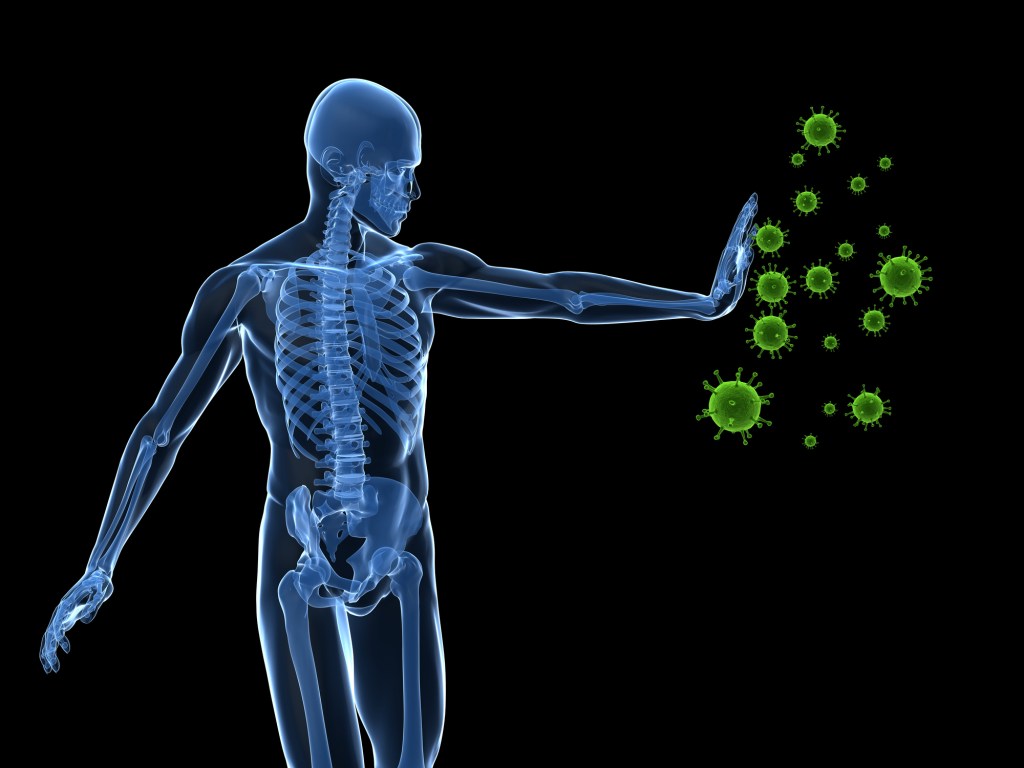
The Immune System
The immune system protects one’s body from external invaders such as toxins, viruses, fungi, and bacteria. There are two main parts of the immune system: innate and adaptive. A person is born with the innate immune system while the adaptive immune system develops as the body is exposed to microbes. Microbes are microorganisms such as bacteria, viruses, fungi, archaea, algae, and protozoa. The innate immune system is the body’s rapid response system and is the first response to an invader. When the innate system recognizes an outside toxin, it engulfs the invader. Phagocytes are immune system cells that kill these invaders. The adaptive immune system works with the innate system to protect the body from outside invaders. This is done through the creations of antibodies. Antibodies are large Y-shaped proteins and are produced by B lymphocyte cells after the body has become susceptible to the invader. As the body develops, the acquired immune system changes. Immunizations/ Vaccines help train the body to make antibodies.
Organs of the Immune System

The immune system is composed of several organs. Some include:
- Tonsils- soft tissues masses at the rear of the throat, the main function is to trap germs that enter the body through the mouth or nose, contain white blood cells
- Lymphatic Vessels- thin tubes that carry white blood cells and lymphatic fluid through the lymphatic system, primary function is to carry lymph, also collects excess tissue fluid
- Thymus- small, irregular shaped gland under the breastbone, produces progenitor cells that mature into T-cells
- Peyer’s Patch- gut-associated lymphoid tissue (GALT), commonly found in the ileum, prevent growth of pathogenic bacteria in the gut
- Lymph Nodes- small glands which filter lymph, swollen in response to infection and tumors
- Spleen- largest organ in the lymphatic system, found in abdominal cavity, filters blood
- Adenoids- patch of tissue in back of nasal cavity, trap harmful germs coming in through mouth and nose similar to tonsils
- Bone Marrow- spongy tissues found inside bones, produces lymphocytes
Ways to Boost Your Immune System

There is still much researchers do not know about the immune system and response. However, the best way to boost and give your immune system the upper hand is to follow healthy habits. A few examples of daily healthy habits are:
- Eat a diet rich in fruits and vegetables
- Exercise regularly
- Maintain a regular sleep schedule and get adequate sleep
- Do not smoke
- Wash hands frequently
- Minimize stress
Diet: Maintain a balanced diet rich in fruits, vegetables, protein, dairy, and grains. Ensure you are obtaining all necessary nutrients and vitamins in your diet. Drinking water is as important as healthy eating. Water plays many important roles in the body such as transporting nutrients, maintaining body temperature, promoting digestion + absorption, creating saliva, and flushing waste from the bodies. Eat foods rich in phytochemicals. Phytochemicals may help protect cellular systems from oxidative damage as well as lower the risk of chronic diseases.
Exercise: There are many different ways to exercise. You do not always have to go to the gym to work out. Dancing, running, and playing cardio games are some fun ways to stay active. Exercise improves cardiovascular health, helps control body weight, and protects against many diseases.
Sleep: Ongoing sleep deficiency has been linked to an increased risk of heart disease, kidney disease, high blood pressure, diabetes, and stroke. Sleep is as important as eating healthy and exercising. It allows the body to rest, recover, and repair itself. Aim for 7 hours or more of uninterrupted sleep at night.
Smoking: Smoking damages the airways and alveoli causing lung disease. Lung disease linked to smoking includes: COPD, emphysema, and chronic bronchitis. Protect your lungs and refrain from smoking.

Wash Hands: Keeping your hands clean is one of the most important steps in preventing the spread of germs. By washing your hands with soap, you remove germs and help prevent infections. Everyone unknowingly touches their eyes, mouth, and nose. This causes the spread of germs. With clean hands, however, you can protect your body by preventing the entrance of germs in the first place.
Stress: Diseases like stomach hives and even heart disease have been linked to the effects of stress. Reducing stress can help promote proper sleep and reduce irritability, anxiety, and depression. Take time out of your day to engage in activities you enjoy such as spending time with your family, reading a book, or going outdoors.
References
Harvard Health Publishing. “How to Boost Your Immune System.” Harvard Health, http://www.health.harvard.edu/staying-healthy/how-to-boost-your-immune-system.
“How Do the Tonsils Work?” InformedHealth.org [Internet]., U.S. National Library of Medicine, 17 Jan. 2019, http://www.ncbi.nlm.nih.gov/books/NBK279406/.
“The Immune System.” The Immune System | Johns Hopkins Medicine, http://www.hopkinsmedicine.org/health/conditions-and-diseases/the-immune-system.
Kinga. “Fighting an Illness? 4 Ways to Boost Your Immune System.” Leukemia and Lymphoma Society, 18 Dec. 2018, http://www.lls.org/blog/fighting-an-illness-4-ways-to-boost-your-immune-system.
“NCI Dictionary of Cancer Terms.” National Cancer Institute, http://www.cancer.gov/publications/dictionaries/cancer-terms/def/lymph-vessel.
P;, Zdrojewicz Z;Pachura E;Pachura. “The Thymus: A Forgotten, But Very Important Organ.” Advances in Clinical and Experimental Medicine : Official Organ Wroclaw Medical University, U.S. National Library of Medicine, pubmed.ncbi.nlm.nih.gov/27627572/.
“Peyer’s Patches.” Peyer’s Patches, medcell.med.yale.edu/histology/immune_system_lab/peyers_patch.php.
 Journey To Cure
Great article!
LikeLike